AI Hoops Shot Analysis

A repeatable jumper is easier to coach when the setup, release timing, and ball flight are measured from the same clip. This page shows how to record a clean shooting video and how to read the ten report-card metrics that come back from the hoops app.

AlphaPeak logo

Record one clean side-angle shot, upload it, and review the full report-card breakdown.

The hoops app tracks the shooter and the ball, finds the gather, dip, jump, apex, release, and ball-flight events, then turns one shot into a PDF-ready analysis. The current workflow is best when each clip contains one clear rep.

How to record a basketball shot video for hoops analysis

How To Record

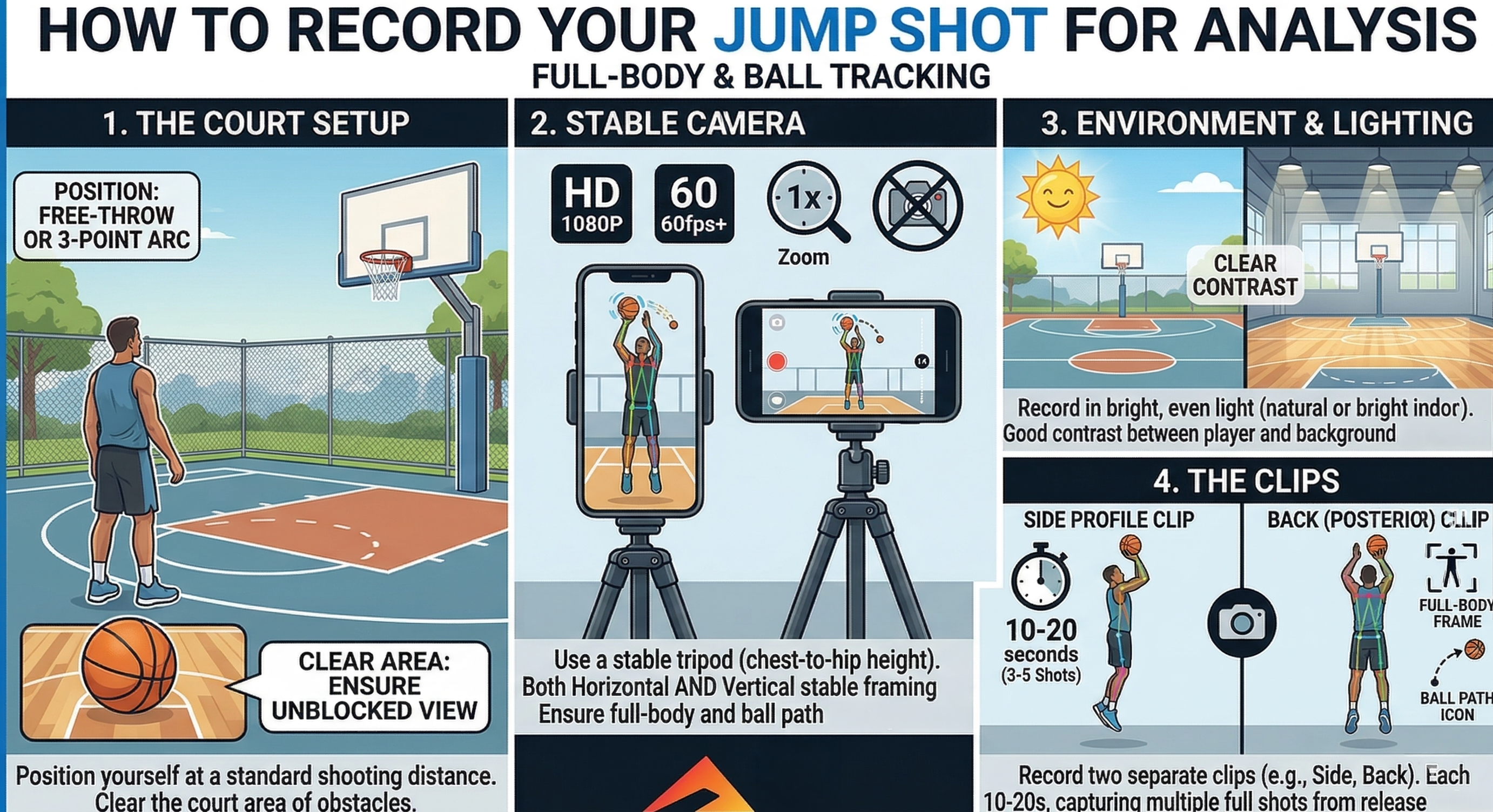
Film from the side so the body and ball events are easy for the app to track.

  • Camera angle: record from the side or a slight side offset, roughly 15° to 45°, so the shooting arm, ankles, and ball path all stay visible.
  • Framing: keep the entire body and the ball in frame from the gather through the follow-through and early flight.
  • Clip length: start before the player settles into the shot pocket and keep recording until after release and ball apex so the event markers can be found cleanly.
  • Video quality: bright lighting, a stable camera, and 60 fps when possible will produce the most reliable report cards.
  • Workflow: upload one clean shot per clip in this version. If you want multiple attempts reviewed, record separate clips.
  • Clean background: avoid other players crossing in front of the shooter and avoid angles where the ball disappears behind the torso.
First five hoops shot analysis metrics

First 5 Metrics

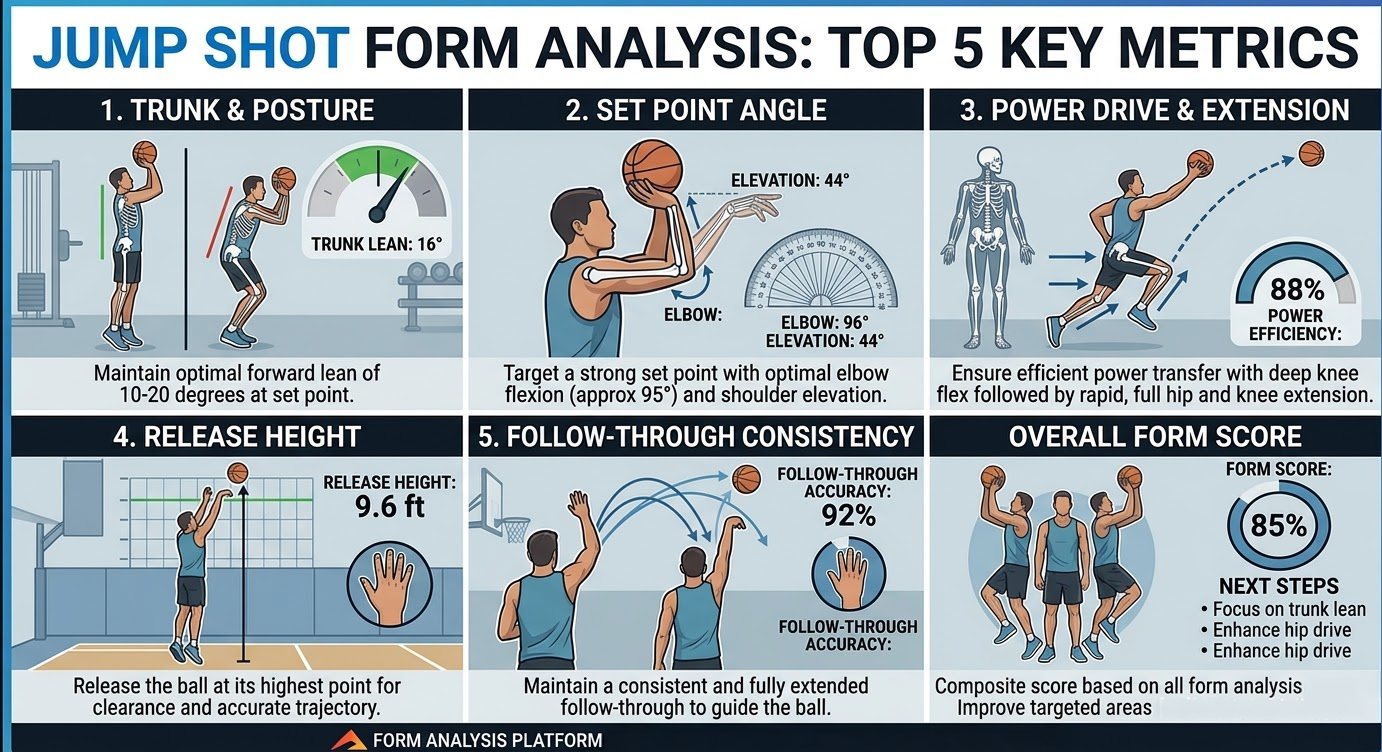
The first half of the report card checks setup, load, and the structure of the release.

These opening metrics tell you whether the shot begins from a stable base and reaches the release frame with enough consistency to repeat under pressure.

1. Stance Width

Ankle spacing at gather start, normalized by body height. A target window of 0.18x to 0.32x height gives the shooter a stable base without forcing extra steering from the upper body.

2. Knee Flexion

The loading angle at max dip. The app looks for about 85° to 115°; too upright can flatten the launch, while too deep can slow the rise and push the release late.

3. Hip Dip Depth

How far the pelvis drops from gather to the loading phase. A small, repeatable dip around 0.03x to 0.08x height helps sequence the shot without a hitch or second gather.

4. Jump Height

Hip midpoint rise from jump start to jump apex. The goal is not maximum lift, but enough vertical rise to sync the release with the jump rhythm, typically around 0.03x to 0.12x height.

5. Elbow Angle

The shoulder-elbow-wrist shape at release. A compact release path usually falls near 145° to 170° and helps preserve line and repeatability.

If one of these values comes back as N/A, the app usually could not confidently see the body landmark or event frame needed for that measurement.

Last five hoops shot analysis metrics

Last 5 Metrics

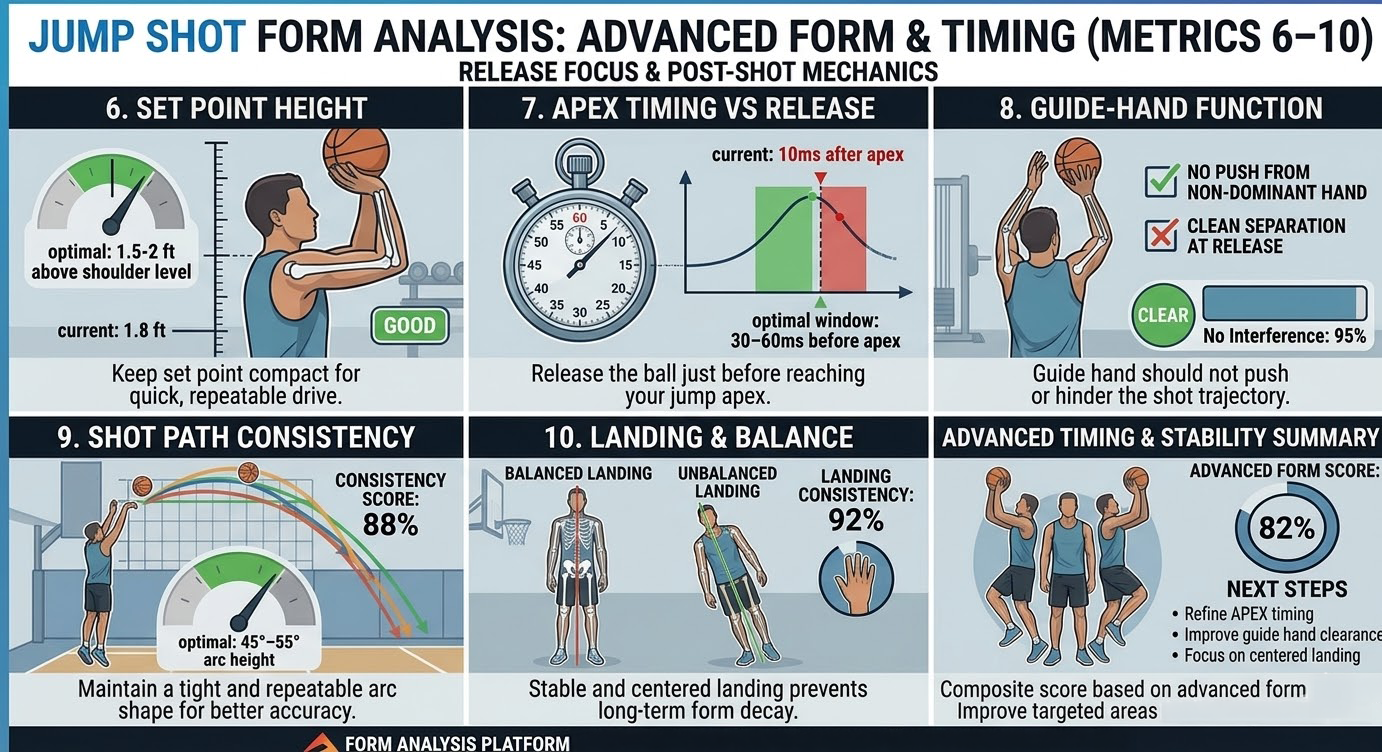
The back half of the card focuses on timing, guide-hand behavior, and the launch path of the ball.

Once the setup is solid, these five metrics help explain whether the shooter is finishing on time and sending the ball out on a repeatable line.

6. Elbow Flare

This measures how far the shooting elbow drifts away from the shoulder-to-wrist release line. Lower is better, with the strongest shots staying under 0.18x shoulder span.

7. Release Timing vs Apex

This compares ball release to jump apex in milliseconds. Negative means the ball left before apex, and the target window is about -40 ms to +10 ms.

8. Guide-Hand Clearance

The app times how quickly the off hand clears the ball after release. Faster is better; under 60 ms reduces the risk of tipping the launch angle.

9. Ball Release Angle

The launch angle comes from the first tracked frames after release. A typical target is 43° to 55°, which helps connect release mechanics to the eventual arc window.

10. Ball Release Height

This is the ball-center height above the floor at release, normalized by body height. A value above 0.86x height usually gives the shooter more clearance and entry margin.

The strongest coaching conversations usually pair these last five metrics together: timing, guide-hand clearance, launch angle, and release height often explain why two shots with similar form still fly differently.