
AI Cycling Analysis: Setup and Metric Guide

This page shows how to record clean cycling footage from the rear and side views, then interpret each biomechanical metric so bike fit and pedaling technique decisions are based on objective movement data.

AlphaPeak logo

Record rear and sagittal clips, upload to the Cycling app, and review fit-critical metrics in seconds.

The Cycling Analysis workflow focuses on alignment, symmetry, and joint geometry through the pedal stroke. These metrics help identify whether the rider can produce power efficiently while reducing repeat stress on the knees, hips, lower back, and shoulders.

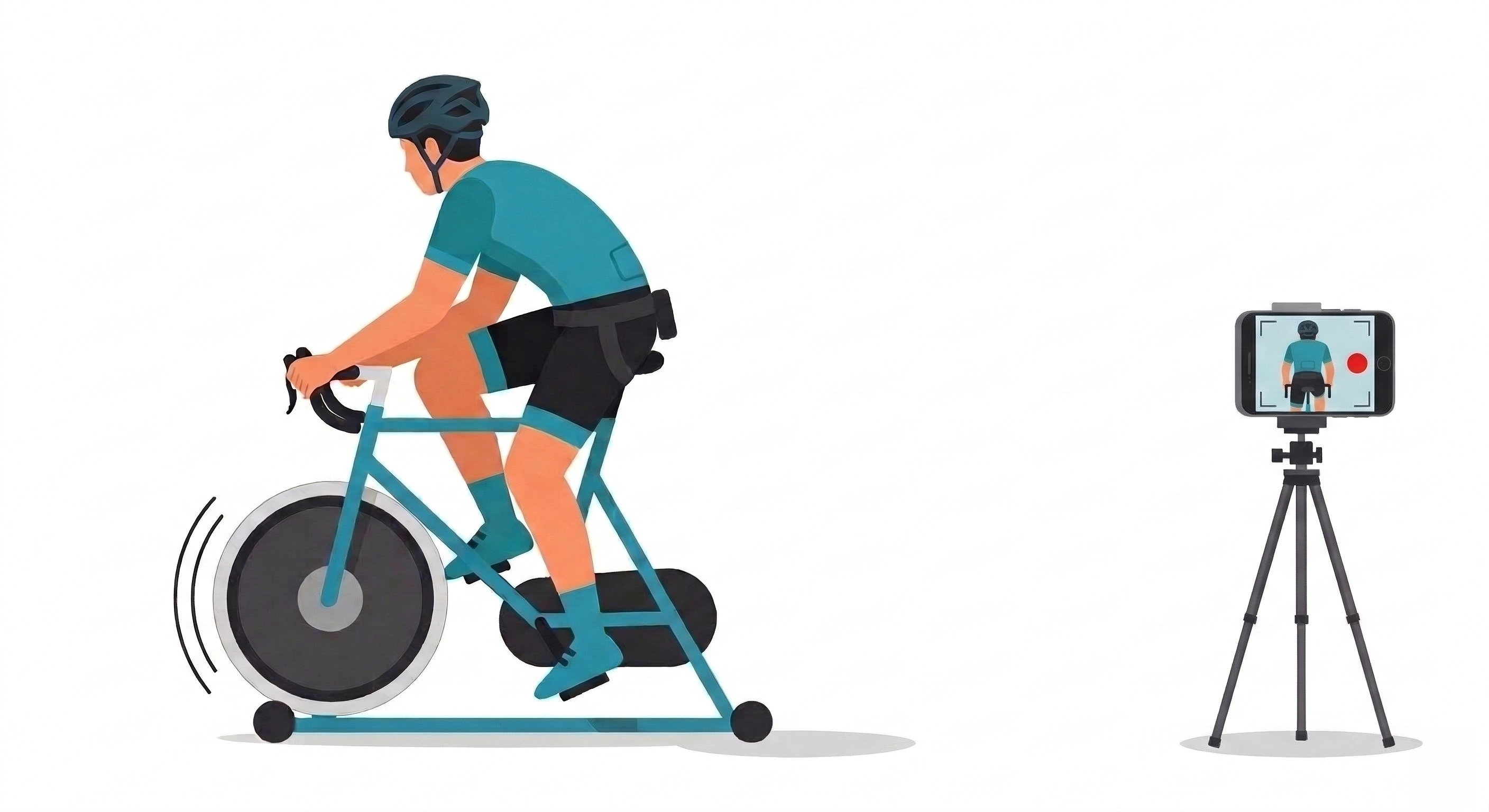
Rear-view setup for cycling analysis recording

Recording Setup

Capture clean rear and side clips so tracking is stable and the report is accurate.

  • Rear view first: place the camera directly behind the bike so both hips, knees, and shoulders stay fully visible through multiple pedal cycles.
  • Sagittal view second: place the camera perpendicular to the bike on the rider's left side to measure joint angles at top and bottom pedal positions.
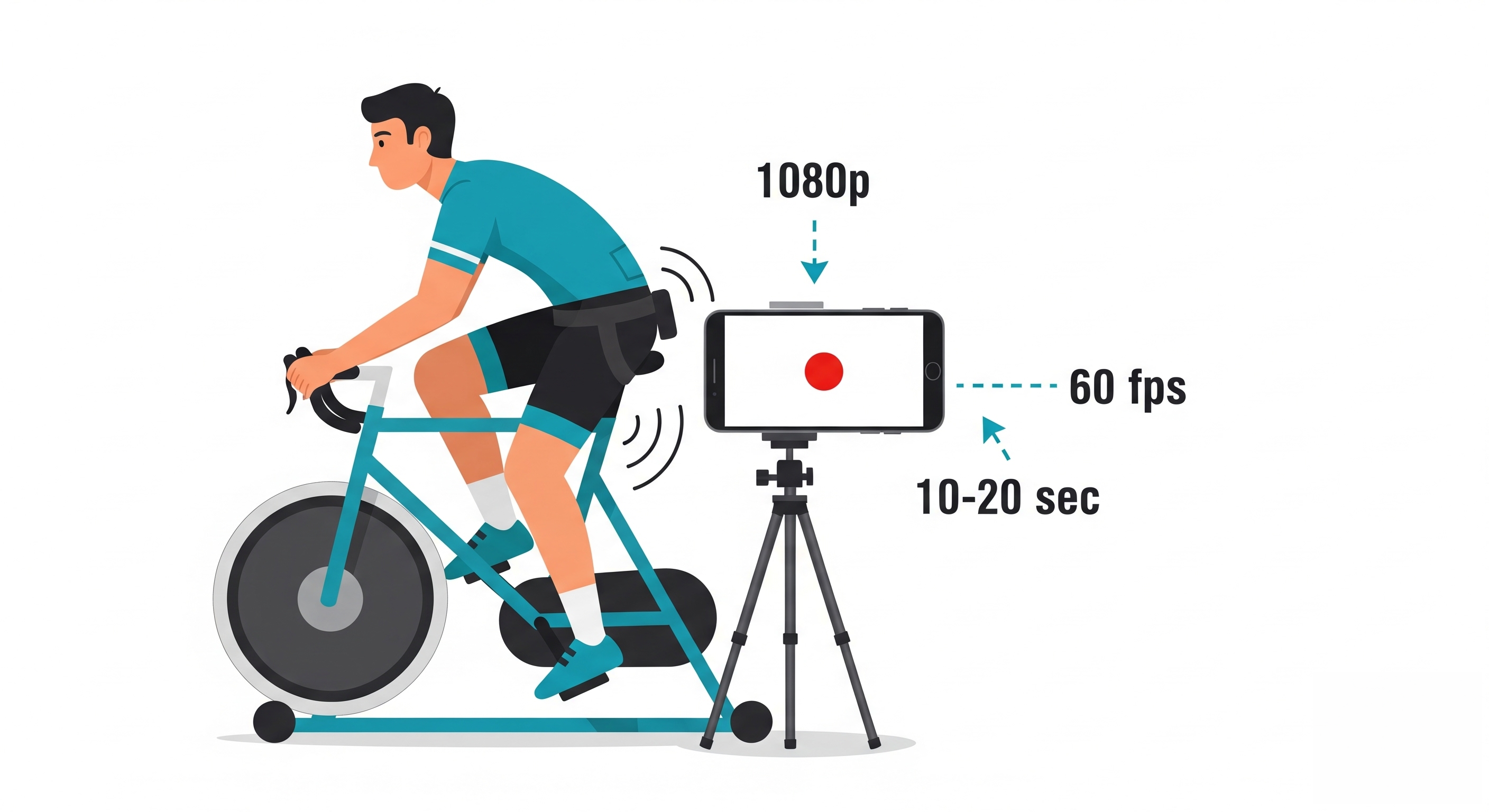
  • Camera settings: record at 60 fps and 1080p whenever possible, with bright lighting and minimal motion blur.
  • Stable framing: use a tripod or fixed support and keep the full rider in frame from shoulder to foot.
  • Consistent effort: pedal at a steady cadence and resistance for 10-20 seconds per view so the averages represent typical riding mechanics.

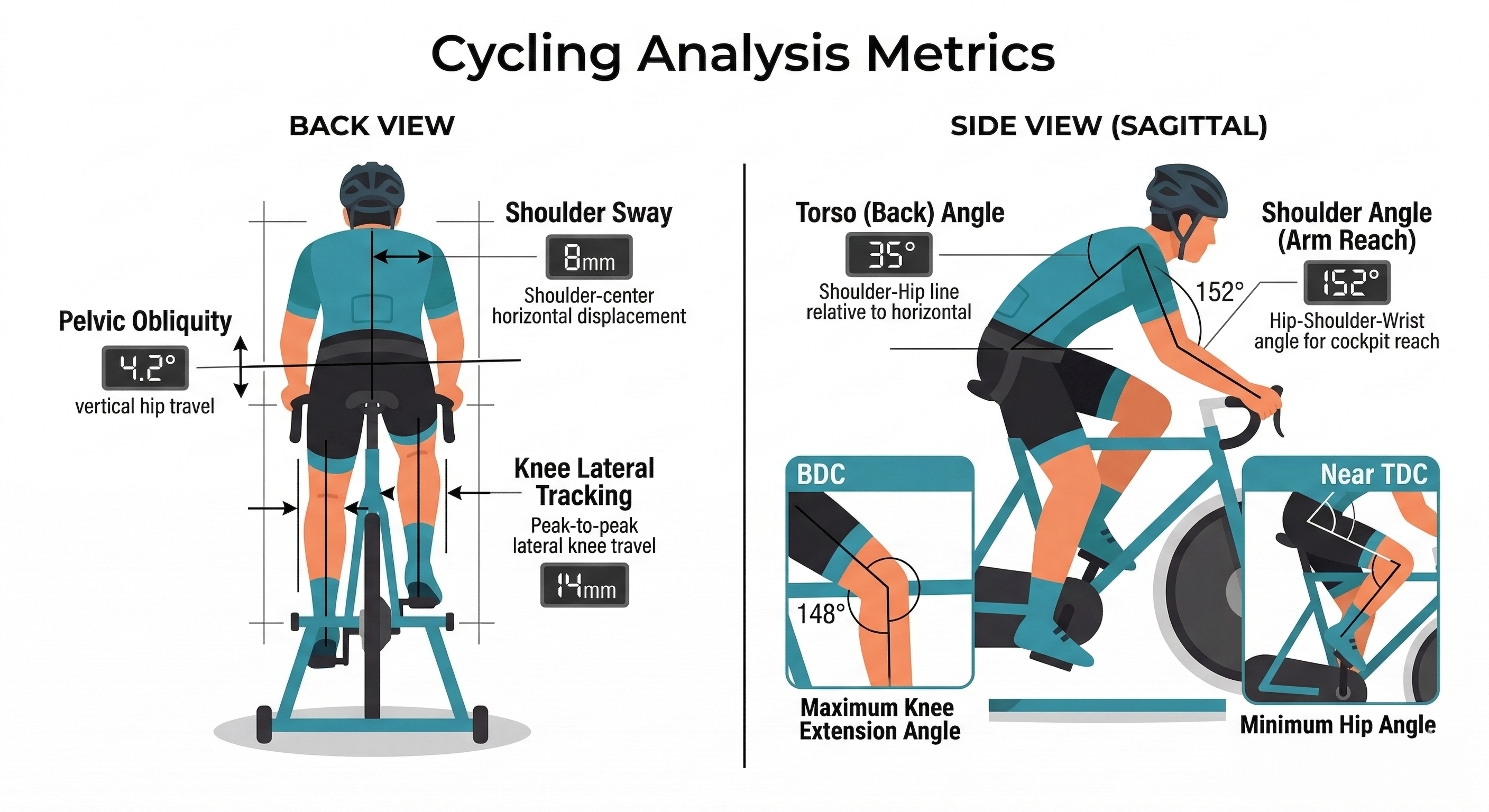
BDC means bottom dead center (pedal at the 6 o'clock position). TDC means top dead center (pedal at the 12 o'clock position).
Sagittal cycling view used for angle measurements

Side View (Sagittal) Metrics

These angles define extension, hip closure, posture, and cockpit reach.

Sagittal metrics are the core fit checks for saddle height, saddle fore-aft, bar position, and rider posture. They help balance comfort, sustainable power output, and long-session durability.

Maximum Knee Extension Angle

Measured at BDC (left side)

The knee angle when the pedal reaches its lowest point. It is critical because excessive extension can overload posterior chain tissues, while too little extension can reduce power and increase anterior knee stress.

Minimum Hip Angle

Shoulder-Hip-Knee near TDC

The smallest hip angle at the top of the stroke. This matters because an overly closed hip can limit force production and breathing, while an overly open hip often signals inefficient position setup.

Torso (Back) Angle

Shoulder-Hip line vs horizontal

The rider's trunk inclination relative to the ground. It is important for balancing aerodynamics with spinal loading and hip mobility so the position remains both fast and sustainable.

Shoulder Angle (Arm Reach)

Hip-Shoulder-Wrist

The reach geometry from hip through shoulder to wrist. It is important because overreach can create neck, shoulder, and hand discomfort, while underreach can crowd breathing and reduce front-end control.

Cycling analysis metrics dashboard and report output

Back View Metrics

Rear-view tracking identifies symmetry and control under load.

Back-view metrics reveal side-to-side control deficits that are often missed from a side view alone. These values are useful for fit refinement, cleat setup checks, and targeted mobility or stability work.

Knee Lateral Tracking

Peak-to-peak lateral knee travel

Measures how far the knee moves side to side during the pedal cycle. It is important because large lateral drift can indicate poor force transfer and increased repetitive load at the knee joint.

Pelvic Obliquity

Vertical hip travel

Measures up-and-down hip movement from one side to the other. It matters because excess pelvic rocking can signal fit asymmetry, core control issues, and compensations that reduce pedaling efficiency.

Shoulder Sway

Shoulder-center horizontal displacement

Measures horizontal side-to-side shoulder movement while pedaling. It is important because shoulder sway reflects upper-body compensation that wastes energy and can indicate instability in the kinetic chain.